
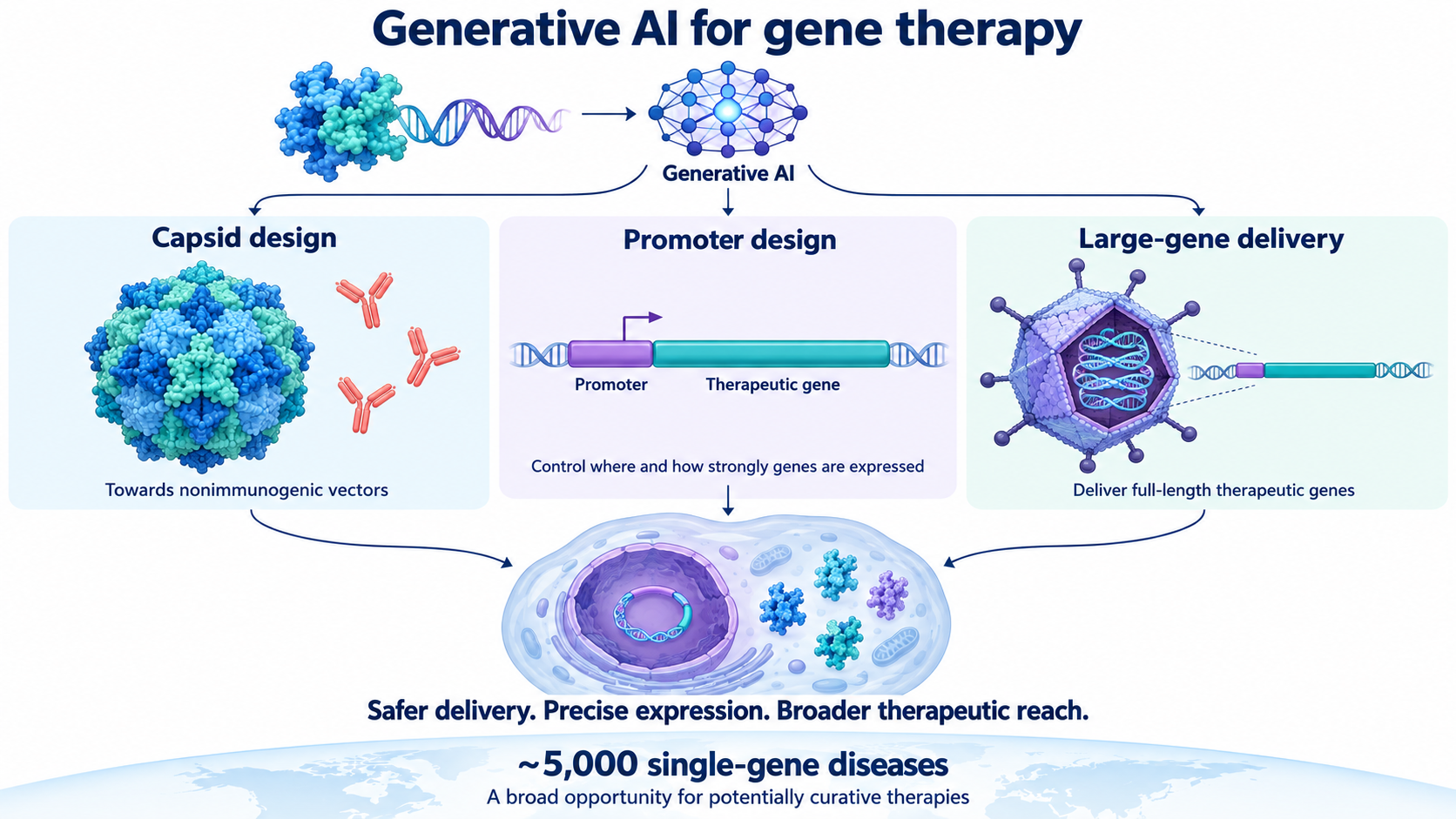
We are developing generative artificial intelligence to design safer, more effective gene therapies. Our models generate viral vector capsids with the aim of eliminating unwanted immune responses, alongside synthetic promoters that control where and how strongly therapeutic genes are expressed. We are particularly interested in delivering large genes, expanding the possibilities for treating diseases beyond the capacity of conventional vectors. Approximately 5,000 single-gene diseases represent a substantial opportunity for gene therapy and, potentially, lasting cures. Realising this promise requires overcoming barriers including immunogenicity, large gene delivery and precise control of gene expression—the central challenges our work seeks to address.
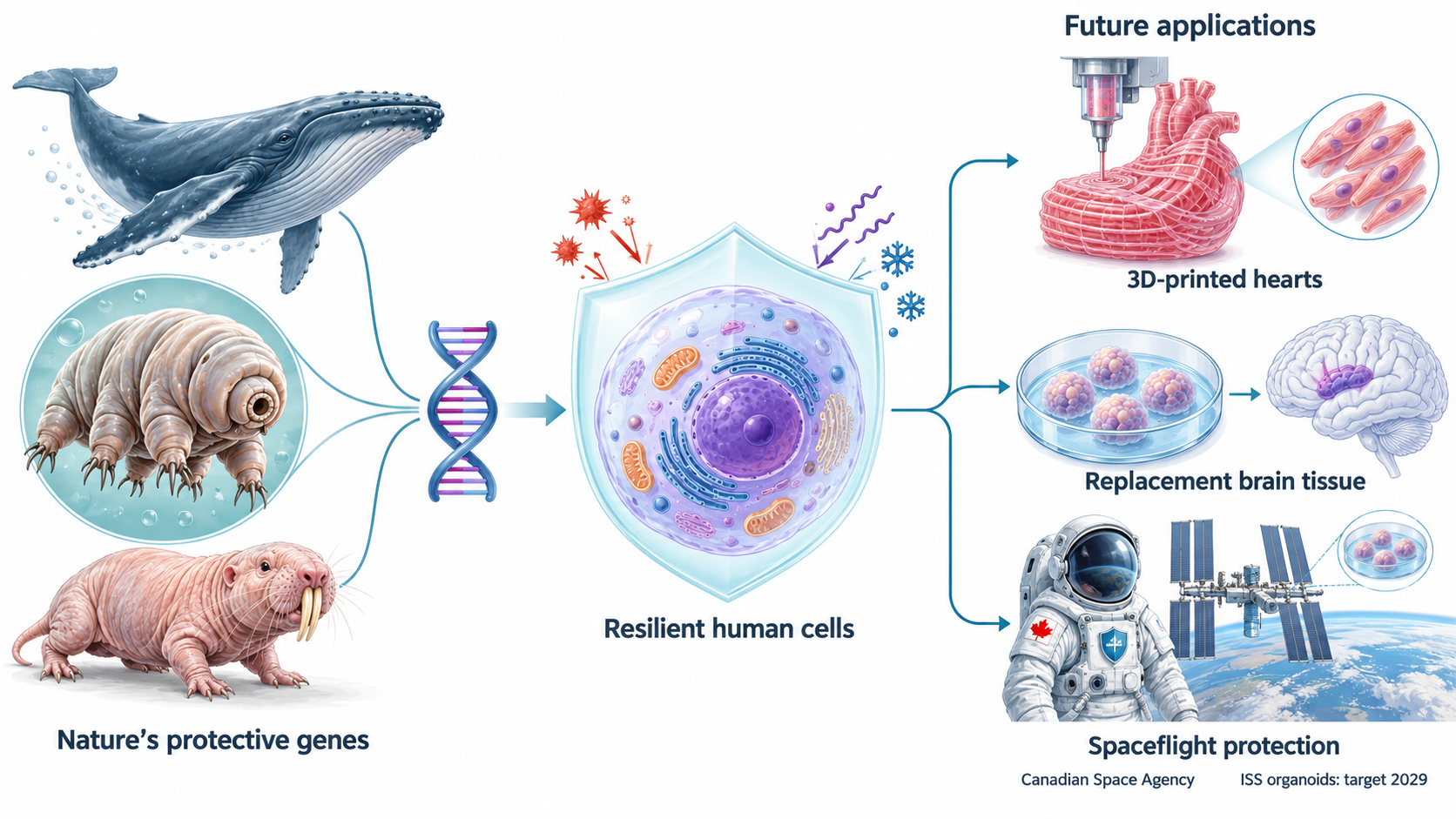
We develop cytoprotective strategies to help human cells withstand stress and injury, advancing the possibilities of cell and gene therapy. Searching nature for protective genes, we draw on animals as diverse as whales, tardigrades and naked mole rats to enhance the resilience of human cells. Our long-term ambition is to enable the 3-D printing of human hearts from stem cell-derived cardiac cells and to create brain organoids that could replace damaged tissue in people with neurodegenerative diseases. We are also working with the Canadian Space Agency to develop a gene therapy that uses these cytoprotective strategies to protect astronauts during spaceflight, with the goal of testing our brain organoids—“mini-brains”—aboard the International Space Station by 2029.
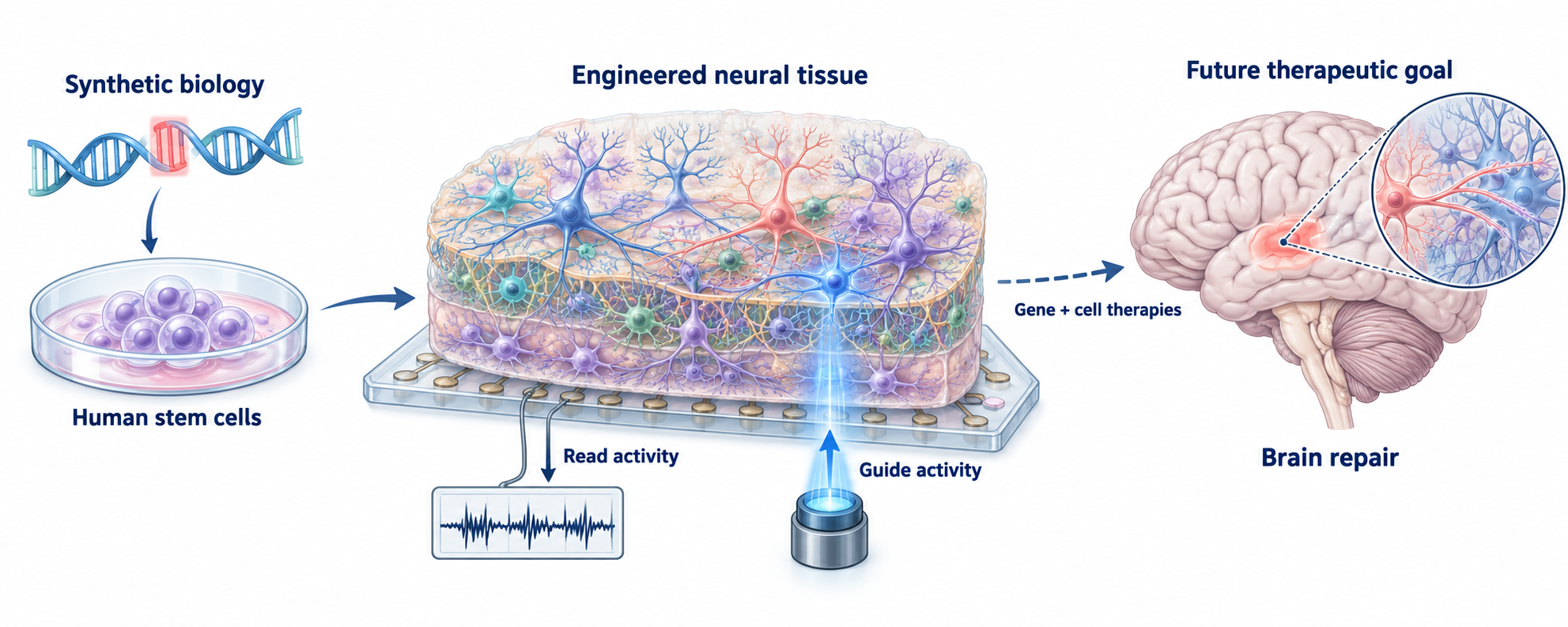
We are developing human brain-like architectures from stem cells and finding new ways to communicate with these living neural networks—both reading their activity and delivering signals that guide their function. By combining tissue engineering with synthetic biology, we aim to integrate gene and cell therapies: engineering neural cells with new capabilities, organising them into functional tissues, and developing interfaces that allow precise control of their activity. Our long-term goal is to create therapeutic neural tissues that survive transplantation, connect with existing brain circuits and help restore functions lost through neurodegenerative disease or injury.
To support new protein designs with cell logic, we are designing genetic circuitry that integrates incoming receptor signals via synthetic transcription factor-promoter systems and produces a controlled response. An example response is the toggling on of therapeutic agent production for a specific period of time.

In addition to designing new receptors for extracellular sensing, we are designing a range of internal cell components. There is essentially unlimited scope for the design of new proteins for augmenting cell function. Specific current work includes the design of synthetic transcription factors and promoters, and the design of new biological therapeutics and delivery systems such as protein nanotubes.

test
test
Taught Courses
Coding for Biomedical Engineers (BME1478).
Introduction to Biomolecular Design (BME412)
Latest Publication
Variational autoencoder for design of synthetic viral vector serotypes in Nature Machine Intelligence
Current Opportunities
Apply for job opportunities on our website.